From Seasonal Chaos to Year-Round Growth Engine in 8 Months
From Seasonal Survival Mode to Systematized Growth
The Context
Five years into running her online garden and outdoor furniture shop, the founder knew her products were good. French homeowners kept buying her terracotta planters, her teak garden tables, her outdoor lighting. Reviews were strong. People who found the shop tended to buy.
The problem was everything else.
Every spring, the same story repeated. March would arrive, temperatures would climb, and suddenly everyone in France wanted to fix up their terrace. Orders tripled. The four-person team scrambled. Customer emails sat unanswered for days. The warehouse became chaos — wrong items shipped, returns piling up, the founder personally dealing with angry customers while also trying to manage ad spend and restock bestsellers that kept selling out.
By September, when the season wound down, everyone was exhausted. The founder would tell herself: this winter, we'll fix things. But winter was spent recovering, catching up on admin, dealing with the backlog. Then March came again.
January 2021. The post-holiday quiet. The founder had just finished her fifth peak season and couldn't face a sixth one like the previous five. A mutual contact introduced us. Her brief was simple: help us get through spring without everything falling apart.
The Challenge
What We Found
The business had real demand. Products moved. Customers liked what they bought. But the infrastructure couldn't support what was already happening, let alone growth.
The Website Wasn't Converting
Traffic was decent — Meta ads brought people in — but too many left without buying.
The numbers told the story:
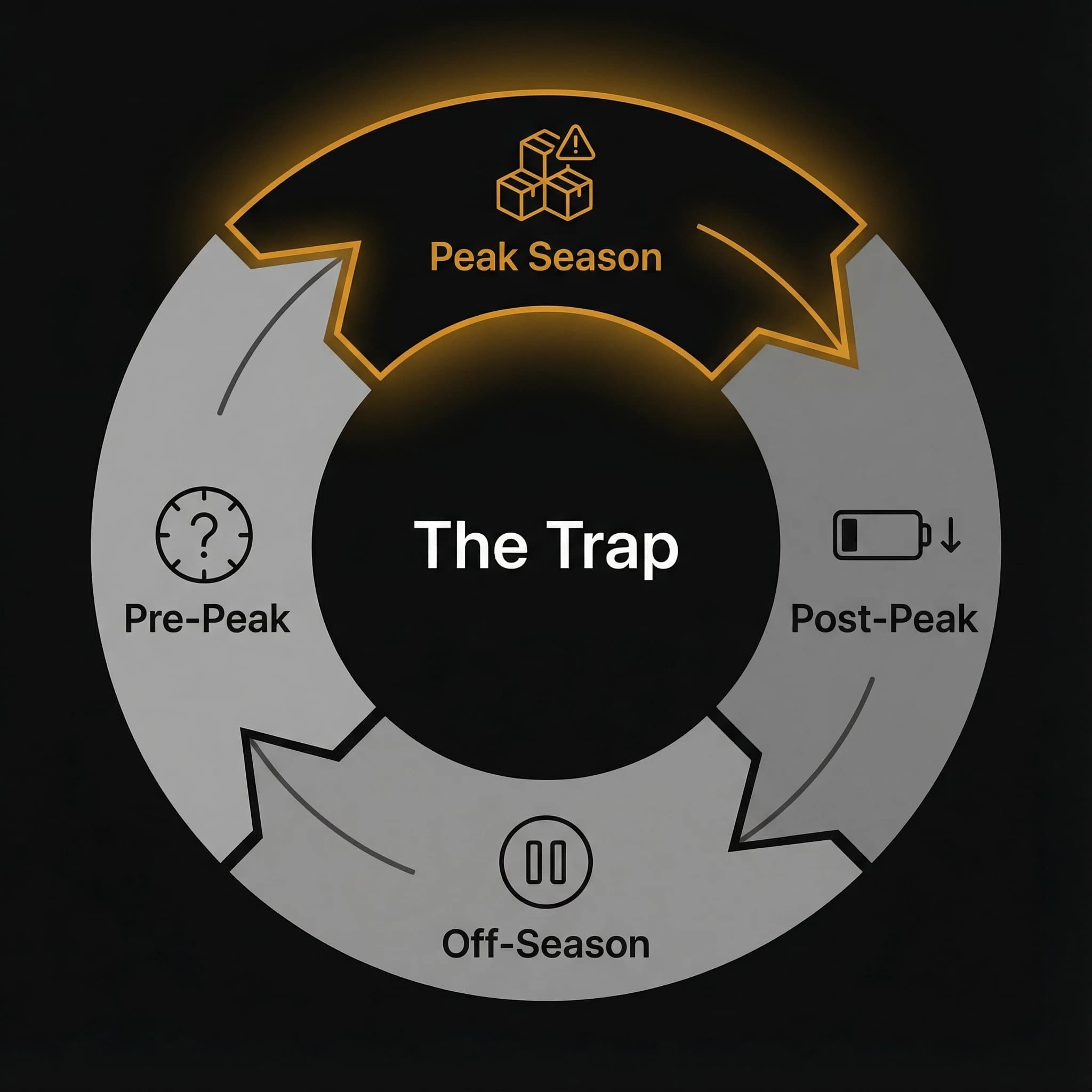
- 1.2% conversion rate (healthy e-commerce sites hit 2.5-3%)
- 78% cart abandonment
- Mobile visitors converted at half the rate of desktop, despite being 65% of traffic
The site itself was the issue. Product pages had two photos each — both on white background, no sense of scale, no lifestyle context. A terracotta pot looked the same as every other terracotta pot online. Descriptions listed dimensions and materials but nothing about where the pieces came from or how to use them.
Checkout required account creation. Five steps to complete a purchase. No PayPal, no Klarna. Shipping costs only appeared at the final step — a classic abandonment trigger.
The founder knew the site needed work but hadn't had time to address it properly between seasons.
Operations Couldn't Handle Volume
The fulfillment process was manual and fragile.
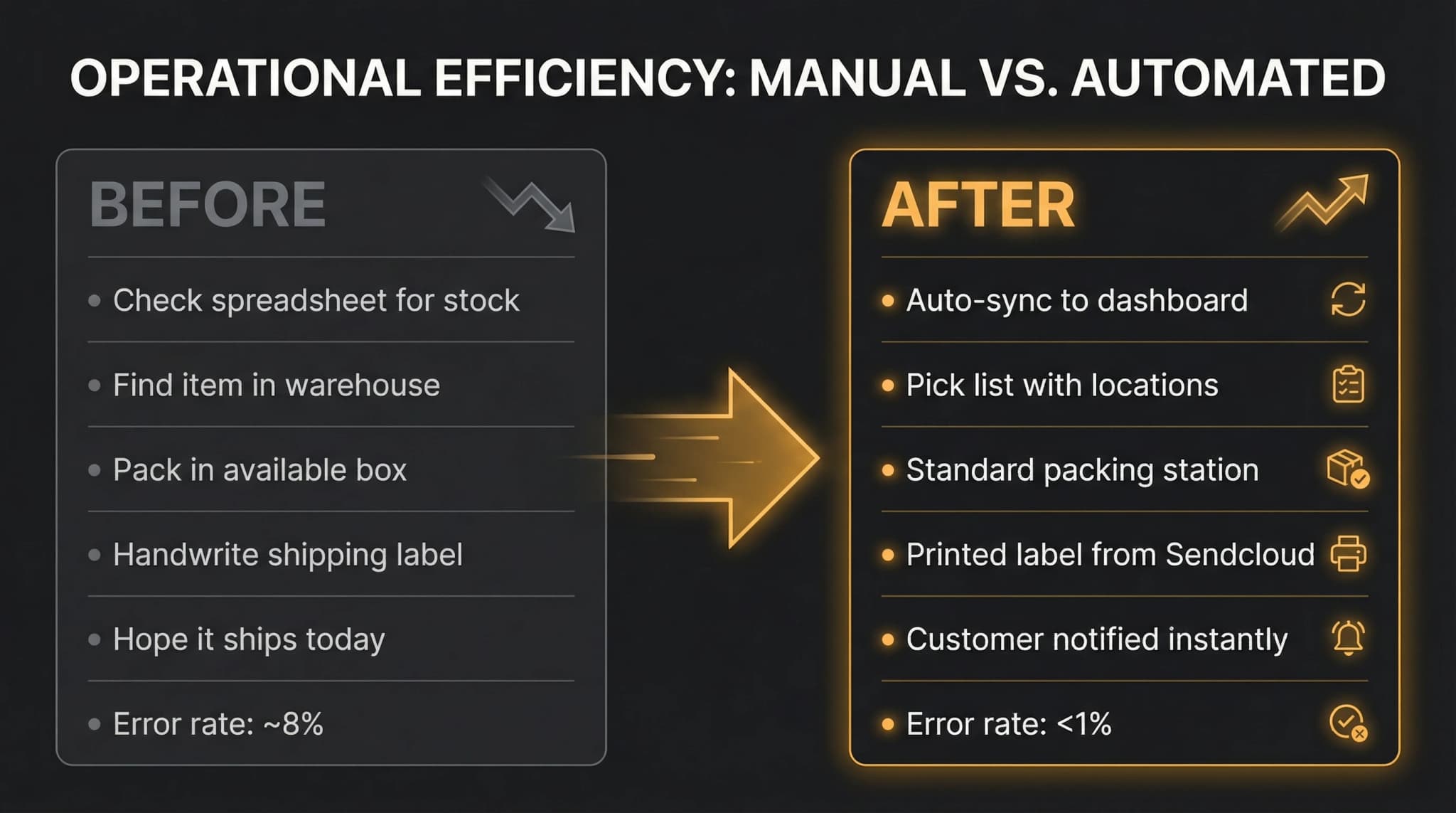
When an order came in, someone would check a spreadsheet to see if the item was in stock. Then they'd walk to the warehouse, find the product, pack it in whatever box seemed right, handwrite a shipping label, and hope Colissimo picked it up that day.
During calm periods, this worked well enough. During peak season, it broke down:
- Wrong items shipped in about 8% of orders
- Bestsellers sold out without warning because inventory tracking lagged
- Customer service emails averaged 72-hour response times
- Returns had no standard process — each one handled differently
The team wasn't incompetent. They were underwater. Four people doing the work of eight, with no systems to help them.
No Customer Relationship Beyond the Transaction
Once an order shipped, the relationship essentially ended.
Email marketing barely existed — just order confirmations and shipping notifications. No welcome sequence for new customers. No abandoned cart recovery. No post-purchase follow-up asking for reviews or suggesting complementary products.
The customer data sat in Shopify, unused. Nobody knew who the best customers were, what they'd bought, or when they might buy again.
Repeat purchase rate was 8%. In home and garden e-commerce, where people furnish terraces over multiple seasons and buy planters in sets, that number should be much higher.
The Brand Didn't Match the Products
This part frustrated the founder most.
She had spent years curating her collection. Many pieces came from small European workshops — Portuguese ceramics, Provençal terracotta, Scandinavian teak furniture. The products had stories.
But online, none of that came through. The website looked like any other garden shop. The photography was functional but flat. The brand had no voice, no point of view. Customers had no reason to choose this shop over Amazon or Truffaut or ManoMano besides stumbling upon a product they liked.
Premium products in a discount presentation.
The Architecture
We had eight months — January through August. The goal was simple: build systems before peak season hit, then run a controlled spring instead of a chaotic one.
Fixing the Conversion Problem First
We started with the website because it was the biggest leak. Every euro spent on ads was going to a site that converted poorly. Fix that first, then everything else becomes more efficient.
Product Pages
The old product pages had two photos and a spec list. We rebuilt them completely.
Each product now got 6-8 images: multiple angles, a hand or object for scale, and at least two lifestyle shots showing the piece on an actual terrace or garden. We batch-shot these during two photography days in February — setting up vignettes in the warehouse and bringing in plants, outdoor rugs, and props to create context.
Descriptions got rewritten. Instead of just "Terracotta planter, 45cm, frost-resistant," we added the origin (handmade in Anduze), care instructions (bring inside below -10°C or elevate on pot feet), and styling notes (pairs well with Mediterranean plants like olive trees and lavender).
We added a "Complete the Look" section suggesting complementary pieces. A customer buying a large planter would see pot feet, a matching saucer, and a smaller planter in the same collection.
Checkout
Reduced from five steps to three. Made guest checkout the default. Added PayPal and Klarna (buy now, pay later — popular in France for furniture purchases). Moved shipping cost calculator to the product page so there were no surprises at checkout.
Mobile
Rebuilt the navigation for mobile. Replaced the buried hamburger menu with a bottom navigation bar — collections, search, cart, account. Made product images swipeable. Increased button sizes throughout.
Trust Signals
Added review counts to product pages (pulled from Judge.me, which we implemented). Added "Trusted by 12,000+ French gardeners" to the homepage. Added logos of press mentions. Added clear shipping and returns information above the fold.
Building Email Into a Real Channel
Email had been purely transactional. We built it into a revenue driver.
Welcome Sequence
- New subscribers got a five-email sequence over two weeks:
- 1. Welcome + 10% first order code
- 2. Brand story — where the products come from, the founder's curation philosophy
- 3. Best-sellers guide by space type (small balcony, large terrace, garden)
- 4. Care tips for outdoor furniture and planters
- 5. Reminder about the discount code expiring
Abandoned Cart
Three emails over 48 hours. The first just reminded them what they left. The second addressed common hesitations (shipping times, returns policy). The third offered free shipping on orders over €75.
Recovery rate went from nothing to 12% of abandoned carts.
Post-Purchase
Four emails over 30 days:
- 1. Order confirmation with what to expect
- 2. Shipping notification with tracking
- 3. Delivery follow-up — how to care for your new piece
- 4. Review request at day 14 (with a small incentive — 5% off next order)
Seasonal Campaigns
Monthly emails to the full list: new arrivals, seasonal guides (spring prep, summer entertaining, autumn protection), end-of-season sales.
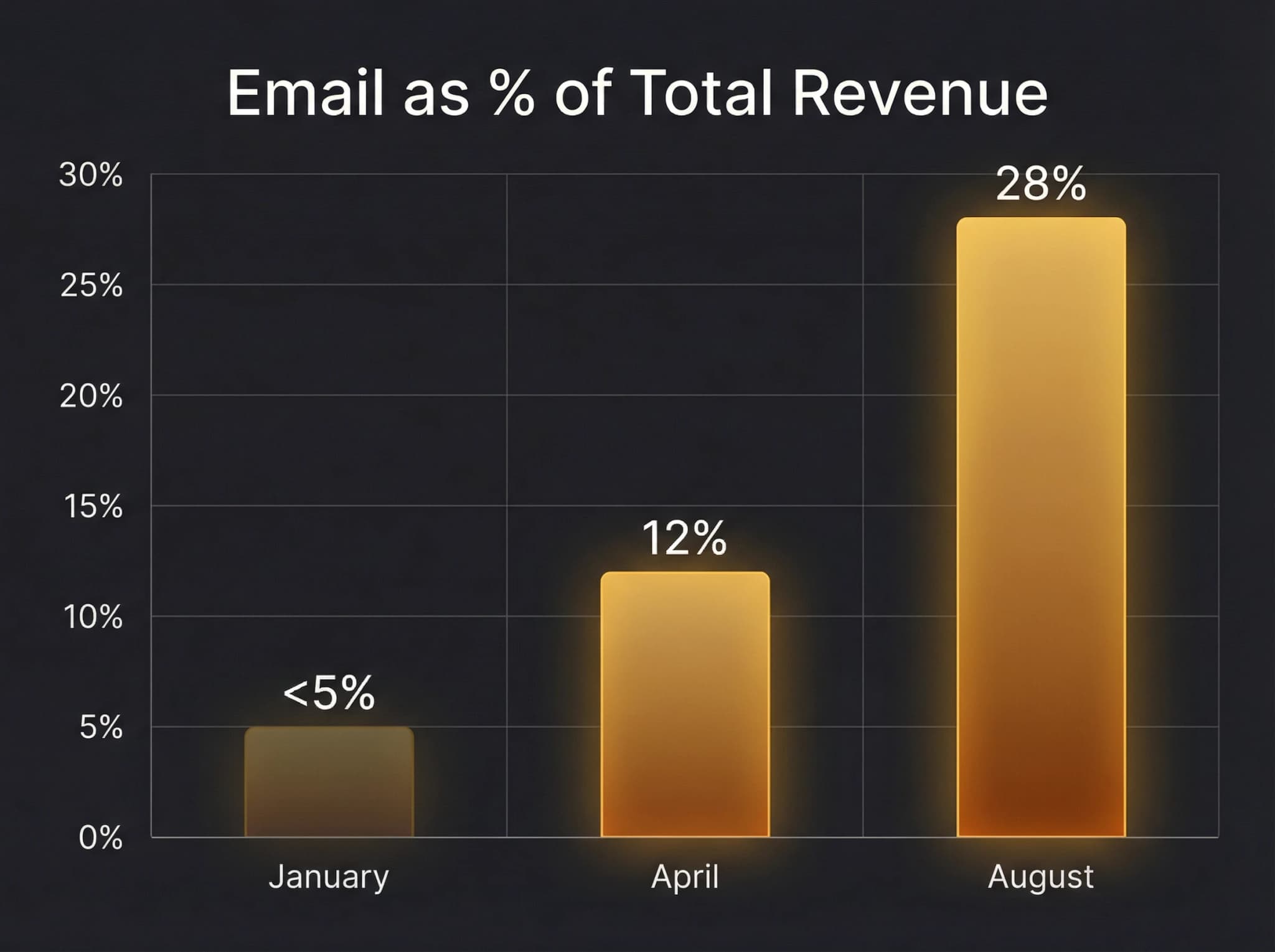
By August, email generated 28% of revenue. It had been under 5%.
Operations That Could Handle Volume
The warehouse and fulfillment process needed complete rebuilding.
Inventory Management
We moved from spreadsheets to Stocky (Shopify's inventory app). Set up reorder points for each product — when stock hit the threshold, automatic alert to the founder. Built a simple demand forecast using the previous two years of sales data, adjusted for growth targets.
For the top 50 SKUs (which drove 70% of revenue), we set higher safety stock levels and faster reorder triggers. Stockout rate on these products dropped from 23% to 4%.
Fulfillment Process
Documented and standardized everything:
- Orders sync to a fulfillment dashboard every 15 minutes
- Pick lists generated automatically with warehouse locations
- Packing station with pre-selected box sizes for each product category
- Shipping labels printed from Sendcloud (integrates with Colissimo, Mondial Relay, Chronopost)
- Customer gets tracking email immediately
- Photo taken of each packed order before sealing (proof against disputes)
Error rate dropped from 8% to under 1%.
Customer Service
Built a help center with 35 articles covering common questions: shipping times by region, how to track orders, returns process, product care, assembly instructions for furniture.
Created response templates for the 20 most common email types. Set up a triage system — shipping problems (urgent) vs. product questions (standard).
Hired one additional part-time CS person for peak season, trained on the templates and escalation process.
Response time went from 72+ hours to under 4 hours, even during June-July peak.
Giving the Brand a Point of View
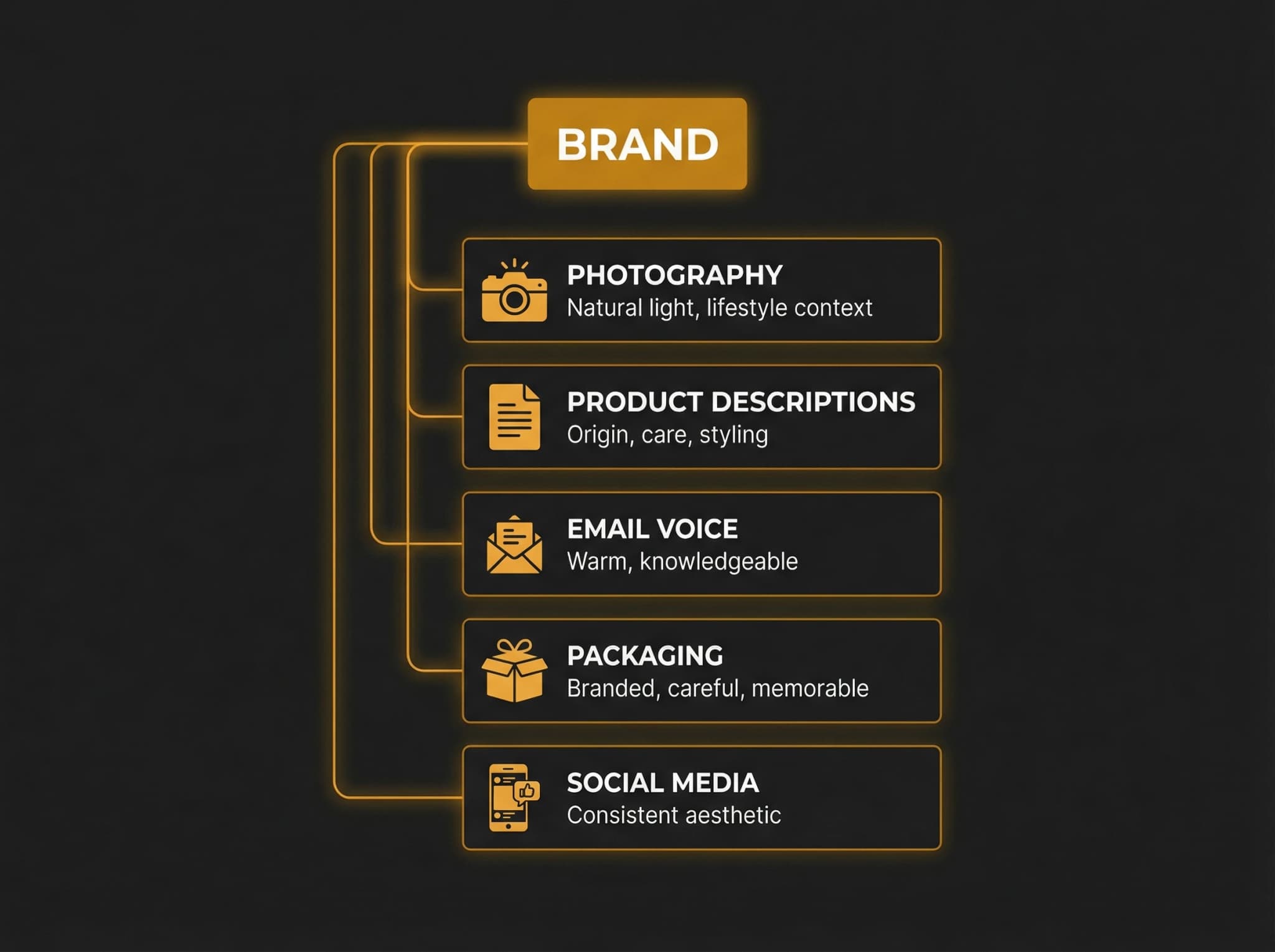
This wasn't a complete rebrand — the products and founder's taste were already strong. We just needed to bring that through consistently.
Photography Standards
Created a simple style guide: natural light, real outdoor settings, lifestyle context in at least 30% of images. All future product shoots would follow this.
Voice and Messaging
Defined how the brand speaks: knowledgeable but not pretentious, warm but not cutesy, European but not exclusive. Wrote guidelines for product descriptions, emails, and social posts.
Packaging
Redesigned the shipping experience. Branded tape. A printed card with care instructions and a thank-you note. For fragile items, proper protective packaging instead of whatever was available.
Small investment, but customers noticed. Review mentions of "beautiful packaging" and "lovely presentation" increased.
The Execution
Timeline
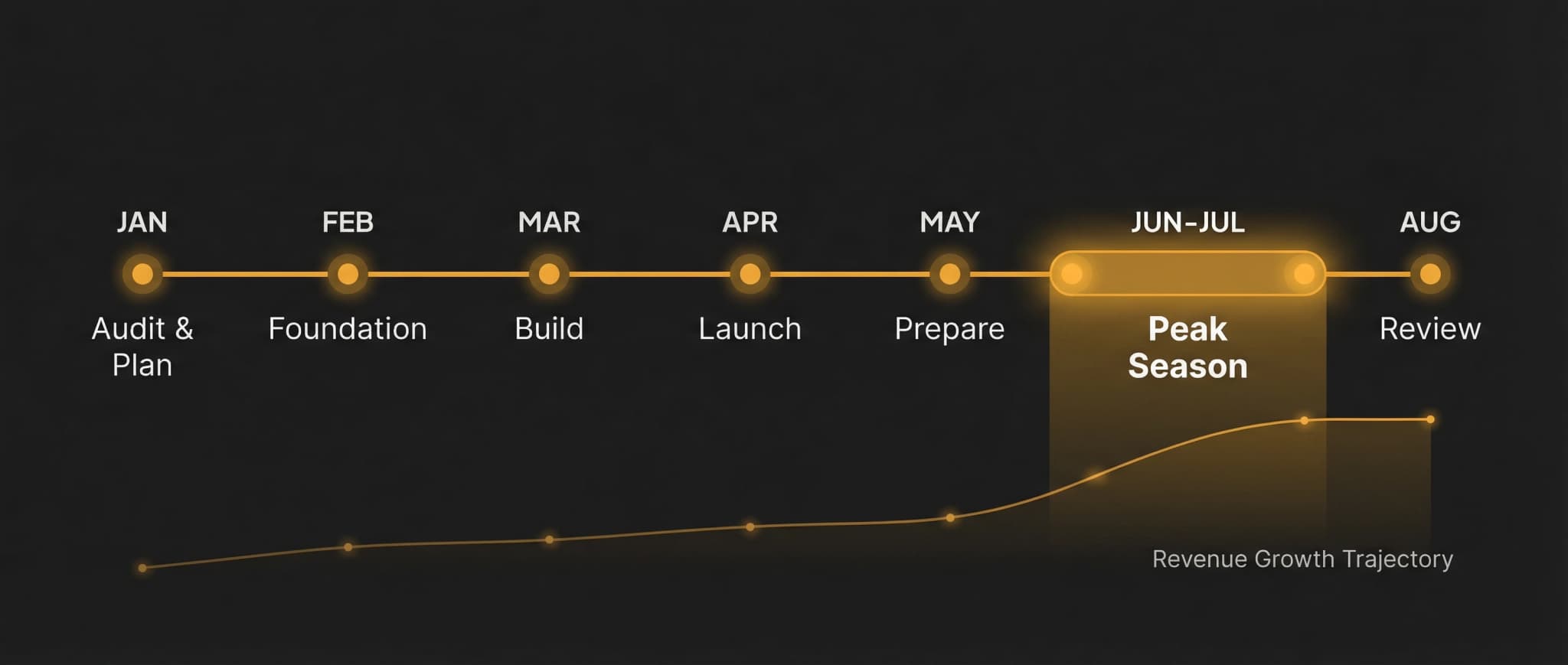
| Month | Focus | Key Milestones |
|---|---|---|
| January | Diagnostic + Planning | Full audit complete, priorities set, tech stack decided |
| February | Foundation | Photography shoots, email platform setup (Klaviyo), Stocky implementation |
| March | Build | Product pages rewritten, checkout rebuilt, CS help center created |
| April | Launch | New site live, email sequences active, fulfillment process documented |
| May | Preparation | Team training, stress testing, peak season contingencies planned |
| June | Peak Season | First "controlled" busy season, daily monitoring, real-time adjustments |
| July | Peak Season | Record revenue month, systems holding, team managing |
| August | Review | What worked, what to improve, Q4 planning started |
How Peak Season Actually Went
The real test was June and July.
Previous years: Team worked 12-14 hour days for two months straight. The founder handled dozens of customer escalations daily. Wrong shipments. Stockouts. Unanswered emails piling up. By August, one team member would typically quit or threaten to.
This year: Same team handled twice the order volume. Customer service stayed under 4-hour response times throughout. The founder dealt with 3-4 escalations per week instead of per day. The team worked longer hours during the busiest weeks, but not every week for two months.
Revenue in June-July 2021 was 2.3× what it had been in June-July 2020. And it felt manageable.
The Transformation
The Numbers
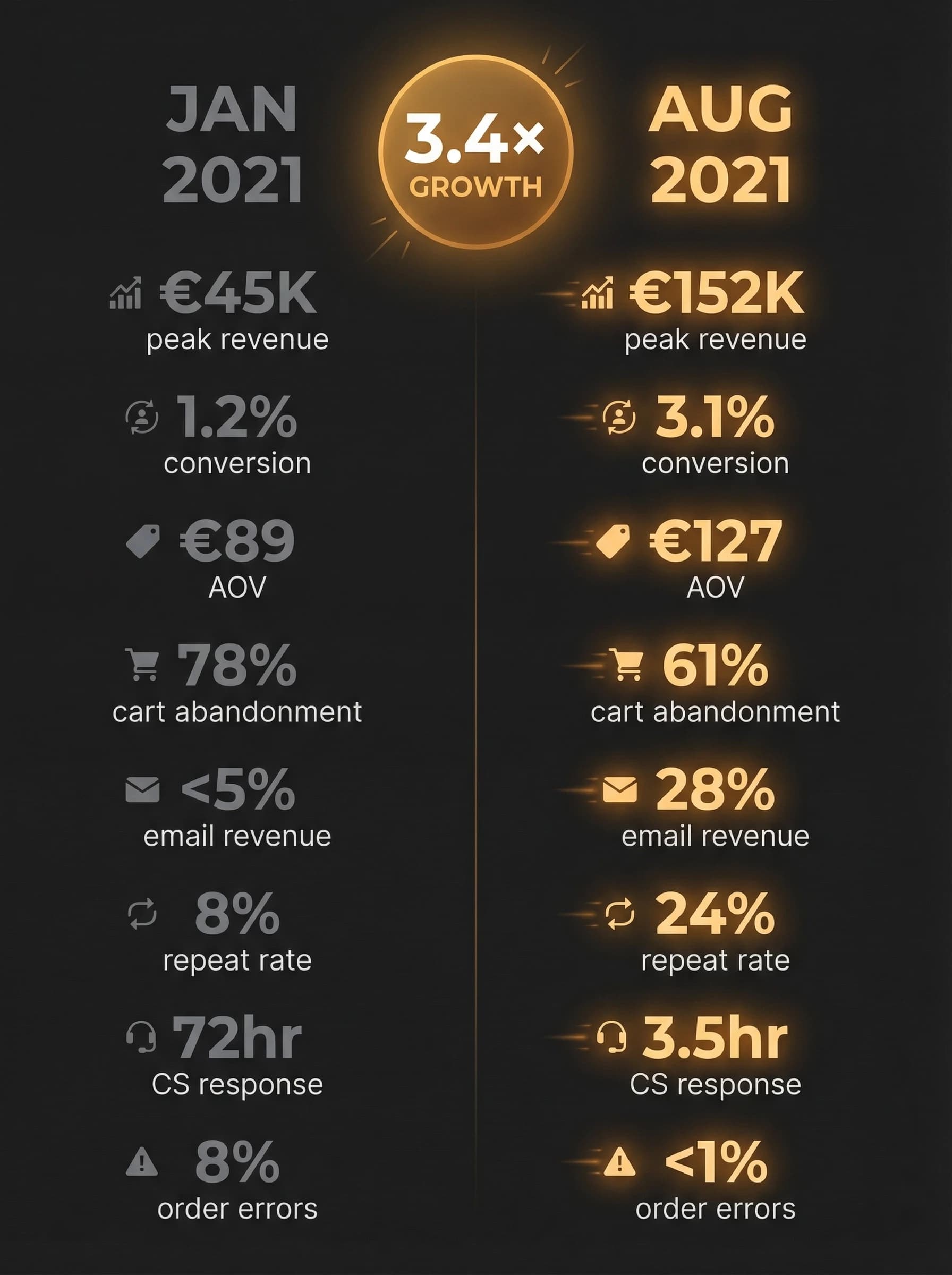
| Metric | January 2021 | August 2021 | Change |
|---|---|---|---|
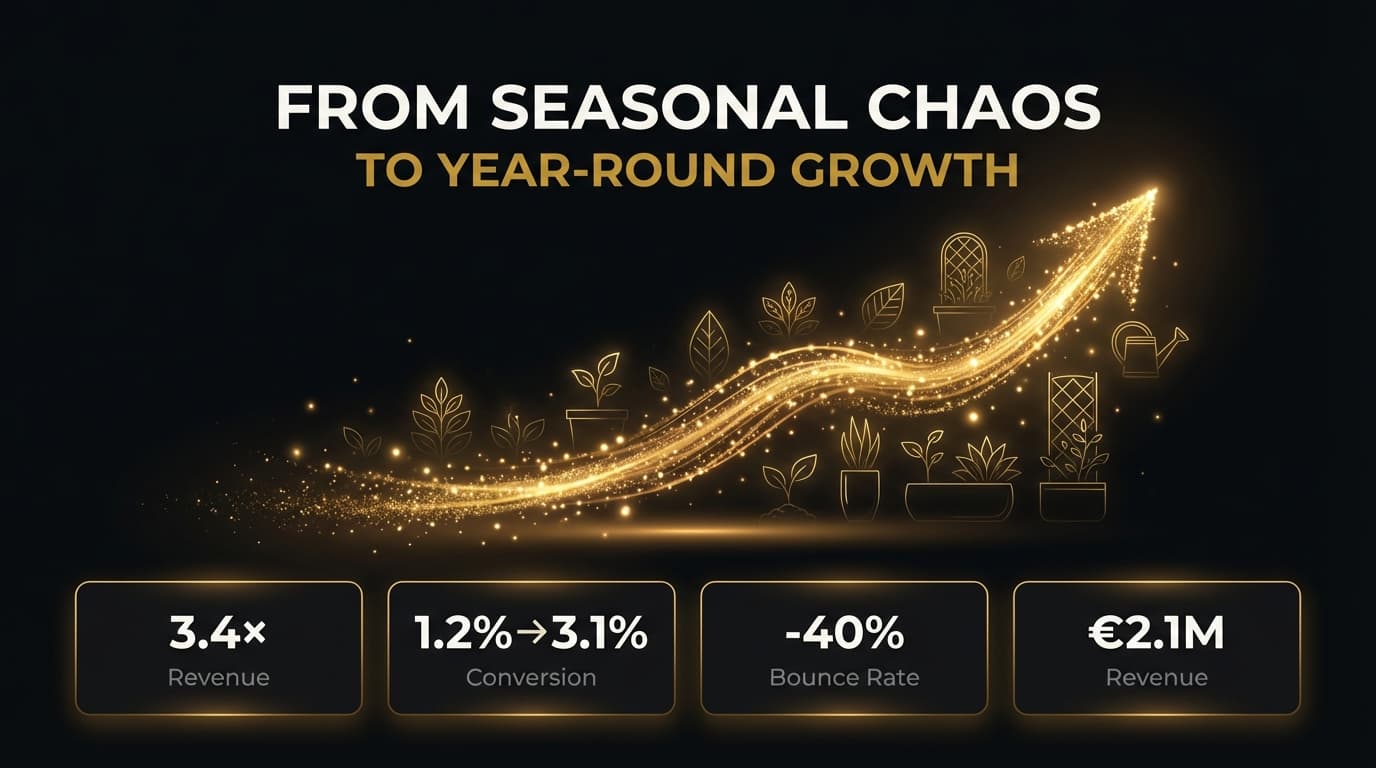
| Peak Monthly Revenue | €45,000 | €152,000 | +238% |
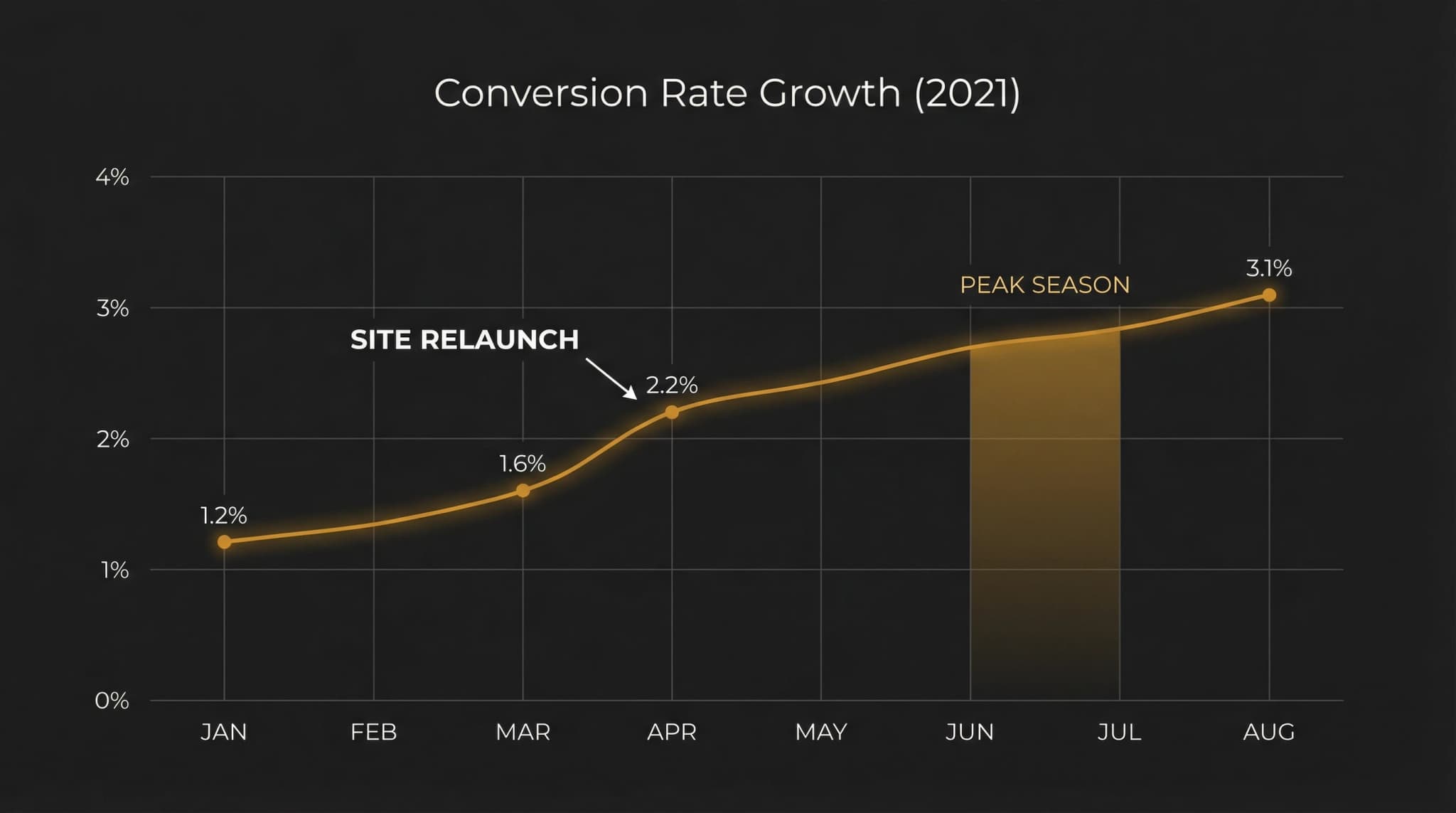
| Conversion Rate | 1.2% | 3.1% | +158% |
| Average Order Value | €89 | €127 | +43% |
| Cart Abandonment | 78% | 61% | -17 points |
| Email Revenue Share | <5% | 28% | +23 points |
| Repeat Purchase Rate | 8% | 24% | +200% |
| CS Response Time | 72+ hours | 3.5 hours | -95% |
| Order Error Rate | ~8% | <1% | -88% |
| Stockout Rate (Top 50) | 23% | 4% | -83% |
What Actually Changed
The products were the same. The team was mostly the same. What changed was how everything worked together.
Before, growth felt like punishment. More orders meant more chaos, more mistakes, more angry customers, more exhausted staff.
After, growth felt possible. Systems could handle more volume. Problems got caught before they cascaded. The founder could think about next season instead of just surviving this one.
The business went from "founder plus helpers" to something that could actually run. Not perfectly — there were still issues, still improvements needed. But the foundation was there.
What This Case Teaches
Conversion before traffic
The instinct when sales are slow is to spend more on ads. But sending more traffic to a site that converts at 1.2% is expensive. Fixing conversion first meant every advertising euro went further. The site improvements effectively made the existing ad budget 2.5× more productive.
Seasonal businesses need off-season building
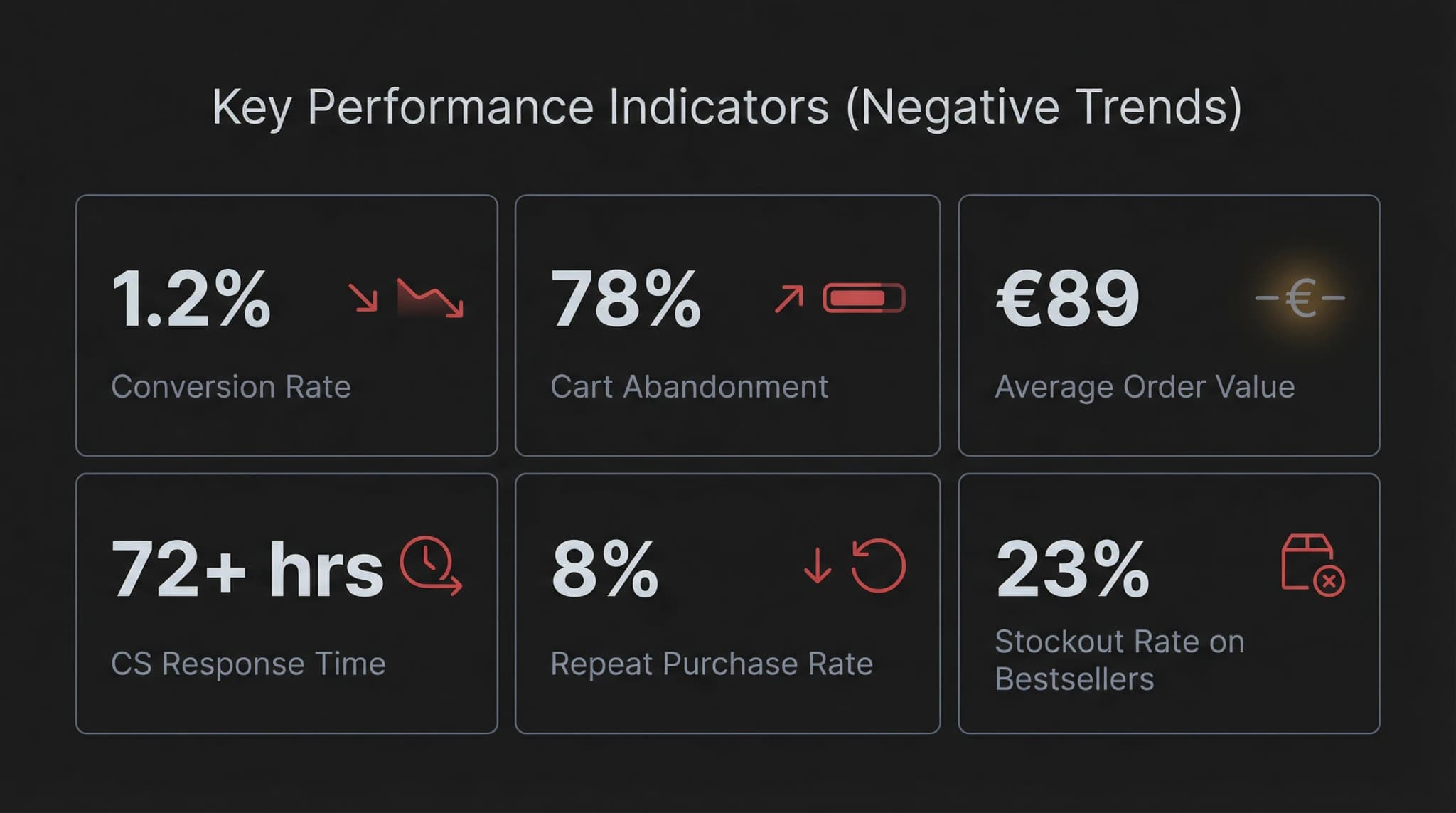
The trap is real: peak season is too busy to fix anything, off-season is spent recovering. Breaking the cycle requires treating off-season as construction time. Everything we built in January through April paid off in June and July.
Systems make teams more capable
The team didn't change much. But a team with documented processes, proper tools, and clear responsibilities performs completely differently than a team making it up as they go. Most "people problems" are actually system problems.
Email is the most underused asset in e-commerce
Social media reach depends on algorithms. Ad costs keep rising. But email subscribers are yours. Building email from nothing to 28% of revenue created a channel that doesn't depend on platform changes or rising CPMs.
Repeat customers change the economics
Acquiring a new customer cost about €22 in advertising. First orders averaged €89. The math only works if some of those customers come back. Moving repeat purchase rate from 8% to 24% meant each acquired customer was worth much more over time.
In Their Words
"I used to dread March. Seriously, I would feel my chest tighten when the weather started warming up because I knew what was coming. This year was completely different. Busy, yes. Stressful sometimes. But we handled it. The team handled it. I actually took a weekend off in June, which hasn't happened in five years. The business feels like a business now, not just me running around trying to keep everything from falling apart."
— Founder, Outdoor Living E-Commerce Company
Recognize This Pattern?
Founder dependency. Sales bottlenecks. Operations that can't keep pace with ambition. These aren't character flaws — they're architecture problems. And architecture can be designed.
If you're generating €1M+ annually but growth creates chaos instead of freedom, we should talk.
Get insights like this in your inbox
One email per week — brand, content, and growth architecture insights.